

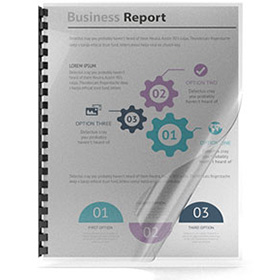
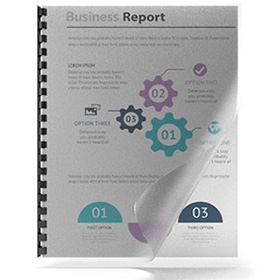
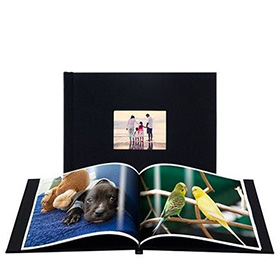
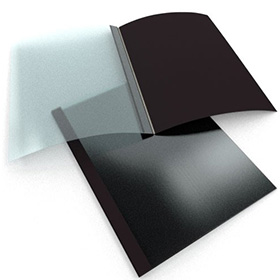
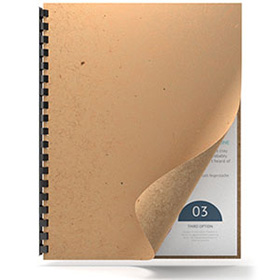
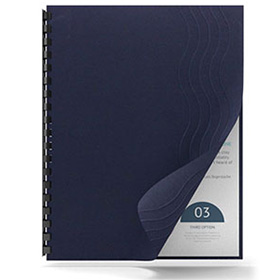

Glossy or luster paper is a favorite for yearbooks, photobooks, and more. If you want your images or graphics to stand out, coated paper is a great solution. However, if you want to bind glossy paper if may cause some issues. Thermal, tape, and perfect binding all use adhesive to bind pages together. If that adhesive is sticking to a coating instead of the paper itself, you will be left with a weak bond. These methods only work by attaching glue to the paper fibers, so either choose a different binding method or find a way to expose those fibers to create a strong bind. There are a couple of different ways you can do this.
Staple Your Pages
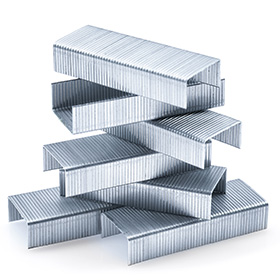
Before you start the binding process, you may want to staple the entire book block together. This will help keep it together, so arrant pages won’t randomly fall out if the bind isn’t secure. If most of the block is stuck it all should stay in place.
Use a Paper Slitter
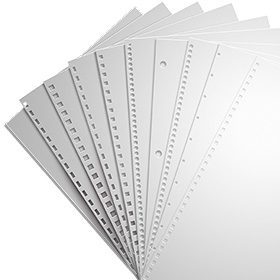
These devices’ sole purpose is to expose the edges of your pages so you can use them for glue-based binding. They make micro-cuts along the edges of the coating, exposing the paper underneath, and allowing it to be bound.
Score Your Pages
A standard practice when perfect binding, roughing your pages increases the surface area and exposes the paper fiber. The result is very similar to a paper slitter and luckily most perfect binders have scoring machines built in. You can find manual or automatic models to fit your workflow.
Sandpaper the Edges
Less reliable than the paper slitter but still worth a try when DIY bookbinding, sandpaper can be used to expose your edges. Experiment with clamping your book block and sanding down the binding edge to get rid of the coating. Just be sure to clean off as much dust as possible when you are done as that can also affect the quality of your bind.
Trim Your Paper
Worst case scenario you can try cutting off a bit of your document to expose the paper on the spine edge. This obviously will affect the size of your book and doesn’t provide the benefit of added surface area that roughing the pages gives you, but it is better than nothing!
In a production setting, a page slitter or scorer is a must. If you are okay with a more DIY approach you can try the more home-grown methods. Have any questions or would like to get some personalized advice? Give us a call at 1-800-944-4573 and we would be happy to help.